
The Un-Expected Luxury: Porcelain Countertops
Written by Biatris Barajas | Published June 26, 2026
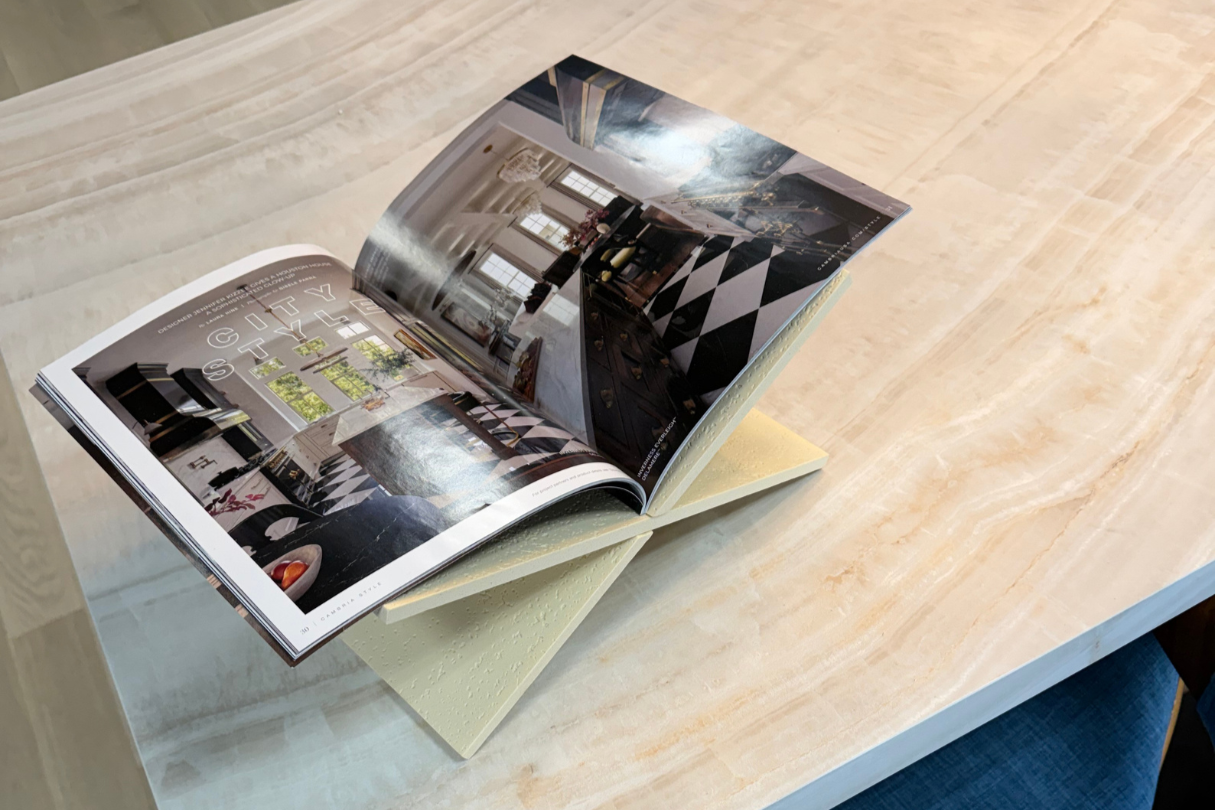
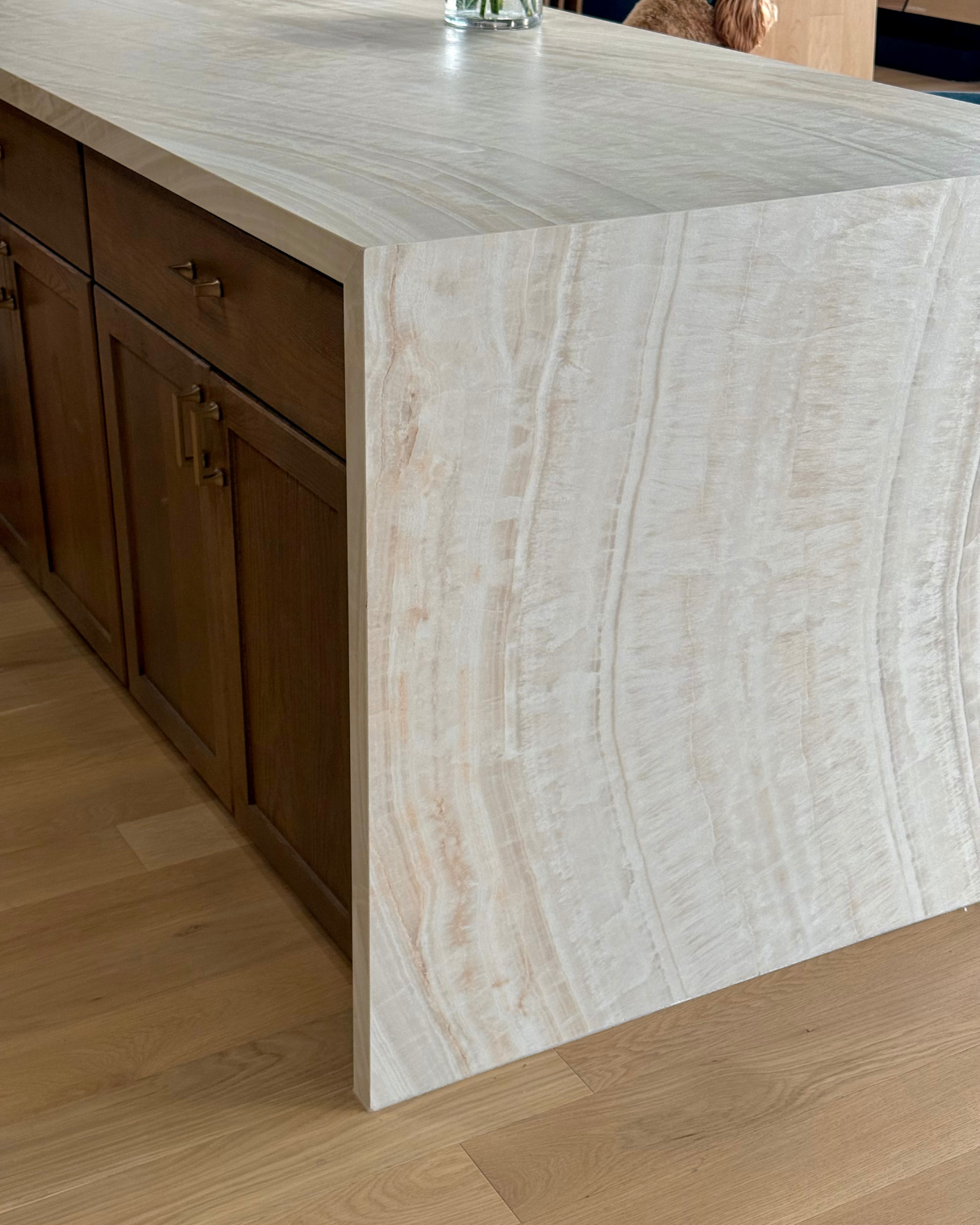
Our Issaquah, WA Showroom displaying Caesarstone’s Onyxa
As a countertop dealer and showroom, I recently Googled “What is the best countertop material for a kitchen?” out of curiosity. I wanted to see what homeowners are seeing when they begin researching their options.
According to Google’s AI Overview, “The ‘best’ kitchen countertop material depends on your lifestyle… quartz is typically the top choice for its low-maintenance and stain-resistant durability…”
That answer makes sense. But it also leaves out the part homeowners care about most: what actually holds up in real life.
Most homeowners are looking for something practical, beautiful, and durable without completely breaking the bank. They want the look of natural stone without the maintenance of real marble. Something that looks delicate but won’t create panic every time a child drops a glass or juice splashes across the island. Breathing room is a necessity for busy families.
For a long time, quartz felt like the answer to that prayer.
Quartz is non-porous, relatively low-maintenance, and easy to live with. Leaving red wine, coffee drops and oil spills on the surface is a problem for future you, and that’s a relief to a busy mom trying to rush her three kids to school on Monday morning.
But quartz does have limitations.
For starters, it is not typically recommended for outdoor use, and it can be sensitive to high heat. So think twice before setting a hot cast iron pan directly on your countertop or that sourdough might come with a very expensive lesson.
That is where porcelain comes in.
Porcelain countertops are quickly gaining attention because they solve many of the pain points homeowners have with other materials. Can porcelain be used outdoors? Yes. Is it highly resistant to heat? Yes. Is it highly scratch-resistant? Yes (though if you care about your knives, you shouldn’t). Can it be more cost-effective than other premium surfaces? In many cases, yes.
Like quartz, porcelain is man-made. Porcelain slabs are created from a blend of refined natural minerals, including clay and silica. These raw materials are ground into a fine powder, pressed into large-format slabs, and fired at extremely high temperatures. The result is a dense, durable, non-porous surface that is resistant to heat, stains, UV exposure, and everyday wear.
From our perspective, porcelain is becoming the new answer for homeowners who are ready to upgrade from outdated and overpriced surfaces into something that is just as beautiful as it is practical.
And to be clear, we are not quartz haters. We sell both quartz and porcelain, and each material has its place. But for busy families, outdoor kitchens, dramatic feature islands, and clients who want a high-end look without some of the maintenance concerns, porcelain offers serious bang for your buck.
We also practice what we preach.
For our showroom’s front desk, we chose Caesarstone’s Onyxa porcelain.
It’s quiet, matte stone look is paired with shimmering streaks and warm sunset-colored layers that feel almost like the Grand Canyon running through the slab. It was exactly the showstopper we wanted clients to see when they walked in.
A warm embrace in Seattle gray.
After having it in our showroom for half a year, we have received countless compliments. With a textured surface, mitered edges and brushed gold hardware that brings out the warmth of the slab, it has fooled more than a few design-savvy clients into assuming it costs far more than porcelain does.
That is the beauty of porcelain countertops: they are practical, durable, and surprisingly luxurious.
And for Washington homes, where style has to meet real life, that combination is hard to ignore.
